How our tiered pricing works
Simple tiered monthly packages sized to your portfolio — what each tier is shaped for, how upgrades work, and what it means for your invoice.
Maje M.
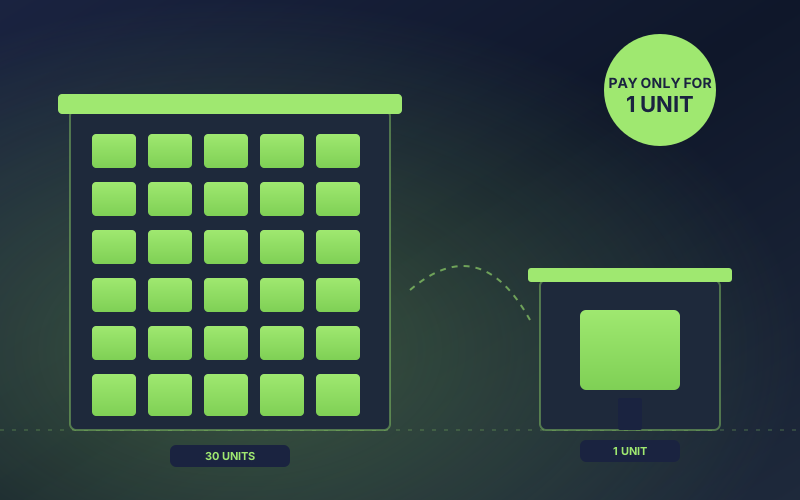
Most property software pricing is a meter: per property, per seat, per something. Meters make your software invoice the one line item you can’t budget, because the number moves every time your portfolio does. We took the meter out.
The model
South PropMan is sold as simple tiered monthly packages sized to your portfolio. You pay one flat monthly amount for the package that matches the scale and shape of your operation. No per-seat licences, no property caps, no feature gate that unlocks only when you pay more.
Four tiers, each shaped around a different portfolio stage:
- Trial — free for 30 days, scoped to your portfolio by our team, no card.
- Starter — for self-managing landlords with a handful of properties.
- Growth — for multi-property portfolios and small PM firms.
- Enterprise — for mall operators, large portfolios, and agencies.
Your quote names the package and its pricing tier up front, and that figure is what you sign. When your portfolio grows, you move tiers by re-quoting — never by a surprise line item appearing mid-term.
We don’t publish the numbers publicly because the right figure depends on your market, your portfolio shape, and your onboarding load. We’d rather scope it with you once than post a sticker that doesn’t fit anyone perfectly. Talk to us when you’re ready to see your quote.
What stays the same
- Properties, team seats and countries remain uncapped soft limits — we still track them but they don’t drive the bill.
- Every proposal shows the package, its pricing tier and the full commercial summary before you sign anything.
- Upgrades take effect from the next billing cycle; the 12-month minimum term and monthly-in-advance invoicing are unchanged.
Why we’re telling you this
The shape of a pricing model matters more than the sticker. When you know how a vendor prices — per seat, per property, per feature gate, or a flat package — you can predict what the bill will do as you grow. That’s the part most pricing pages obscure. Ours is right here: one package, one monthly amount, scoped to your market.
If the arithmetic doesn’t work for your portfolio shape, email us. We’d rather lose the deal than feel clever about a price no one can justify.